Honoring Dr. King
Honoring Dr. King: Organizing for Justice, Mobilizing for Democracy

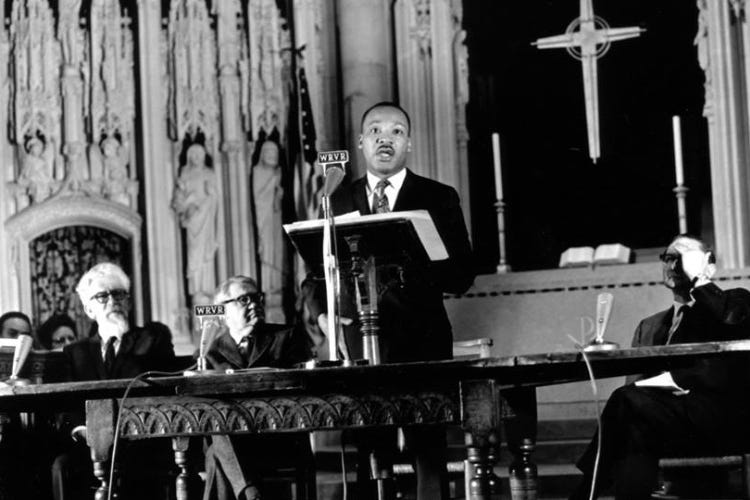
Each year, we pause to honor the life and legacy of Martin Luther King Jr.—a prophet of justice, a bridge-builder across communities, and one of the most powerful organizers this nation has ever known. While many remember Dr. King for his soaring speeches and dream-filled words, his true genius also lived in the daily, disciplined work of organizing people and mobilizing communities to act.
Dr. King did not believe change happened by accident. He believed it happened when ordinary people, especially young people, recognized their power, stood together, and showed up.
At the heart of his work was a deep belief in democracy. Not as an abstract idea, but as something made real through participation. For Dr. King, justice was not only preached; it was practiced. And Voting was one of the most powerful tools to practice it.
Dr. King the Organizer, Not Just the Orator
History often remembers Dr. King at the podium, but he spent just as much time in church basements, living rooms, and strategy meetings. He organized boycotts. He mobilized marches. He trained everyday people to lead. He believed movements were strongest when they were rooted in community and led by ordinary people.
During the civil rights movement, voting rights were central to the fight for freedom. Dr. King understood that without political power, progress could, and would, always be undone. That’s why he stood shoulder to shoulder with students, elders, faith leaders, and workers demanding access to the ballot.
In 1965, as he marched from Selma to Montgomery, Dr. King made clear what was at stake:
“The denial of the right to vote is the denial of dignity itself.”
Those words still echo today.
Faith, Hope, and Collective Action
Dr. King’s faith informed his vision, but it was never excluded. He spoke of a “beloved community”. Of a society rooted in dignity, fairness, and shared responsibility. His message welcomed people of all beliefs who were willing to commit themselves to preserving and advancing justice.
In churches across the South, Dr. King helped transform sacred spaces into organizing hubs—places where people were reminded not only who they were spiritually, but what they could do together. Faith, for him, was not passive. It was active. It showed up.
That spirit lives on when communities gather to encourage one another, when elders remind young voters of their power, and when people make space for civic engagement as an expression of care for one another.
A Message for Black and Young Voters Today
Dr. King believed deeply in young people. He saw students not as leaders of tomorrow, but leaders of the moment. From the Birmingham Campaign to the Student Nonviolent Coordinating Committee, young voices were never an afterthought. Those voices were the movement’s engine.
He once said:
“Change does not roll in on the wheels of inevitability, but comes through continuous struggle.”
That message matters now.
Young voters and Black voters have always been catalysts for progress. When we organize, turnout rises. When we mobilize, policies change. When we participate, democracy becomes more real.
Dr. King would remind us that civic participation is not about perfection but rather is about persistence. Showing up, staying engaged and encouraging one another.
Voting as an Act of Love and Responsibility
Dr. King also framed voting as a moral act. Not because of party or politics, but because of people. He believed the ballot was a way to speak for those who were silenced, to honor those who were beaten, jailed, and killed for demanding access to it.
“Every time you let a man drop a ballot in a box, you are helping to make democracy real.”
Voting, organizing, and mobilizing are all ways of saying: we care about each other. They are ways of protecting hard-won rights and pushing the nation closer to its promise.
Carrying the Legacy Forward
There is more to celebrating Dr. King than just to quote him. We have to continue his work. To build community. To educate. To encourage participation. To listen to the young voices. To make sure no one feels alone or powerless.
Dr. King taught us that movements are built through relationships and through hope. It’s disciplined love in action.
As we honor him today, let us remember that democracy thrives when people participate—and that each generation has a role to play in shaping what comes next.
May we organize with intention.
May we mobilize with compassion.
And may we continue the unfinished work of justice—together.